Lately, I have been talking to more and more "older people" - that is, those past the age of 55 or so, many well past 65 - and have noticed a few things that are probably more than anecdotally related.
For one thing, older people seem to think more conservatively (with occasional Conservative leanings, but not necessarily). They may make slightly inappropriate remarks, racist, sexist, or otherwise "narrowminded" in ways that may have shocked their younger selves (and certainly now surprise me). They generally also shut down their willingness to try new things. Xenophobia, wariness of novelty, and anxiety about the unfamiliar: all these point to a more conservative way of thinking and dealing with the world.
Why should that be? That the elderly become distressed about "newfangled" technology or foods or customs is a commonplace. A good way to get an easy laugh in a TV show is to show an obviously elderly person trying out a computer or video game - and either getting horribly flustered or mastering it in record time. Like many stereotypes, this one has a ring of truth to it. But no one asks why.
Familiarity suggests access to robust memories. You cannot feel certain about anything you just encountered for the first time, and as you age, your suspicion of novelty - untried, inverified things - grows. We like to have memory, the deeper the better, to check for data. (Younger people tend to embrace the new: since pretty much everything in the world is new to them, this is generally adaptive trait, even if it can lead to trouble when wise counsel from elders is disregarded.) The strongest memories are the oldest ones. What we call habits are actions and expectations that have been repeated and proven safe, useful, reliable, etc. All this reliability relaxes us and saves us mental (and sometimes physical) energy.
And that energy allocation is key.
When we have to make a decision, e.g., see this movie not that, or try this weird food our friends are pushing on us, we engage certain parts of our frontal lobes, and this requires increased nutrient-rich blood flow. If we are tired, hungry, stressed, etc., that blood may be needed elsewhere in our brain. The thought of having to decide something is annoying to say the least. Remember how it was the last time you had to "have a talk" with a significant other or boss after a few hours' sleep or while you had the flu? Awful, wasn't it? You didn't have the energy to weigh things up, say the right thing, avoid further trouble. Such things are always better when we are in top form.
As we age, our bodies require more energy just to keep functioning smoothly. Systems start to break down. Food processing becomes less efficient (fact: stomach acid production decreases with age and leads to incomplete digestion and uptake). Muscles, among other things, heal more slowly. And on and on. The last thing a person like this needs is the unfamiliar.
Sad to say, the familiar includes one's usual group - whatever that group happens to be. It is sad because the avoidance of the Other, the outsider can turn into, or merely appear to turn into, bigotry. Me = good. Not-me = bad.
If this is all in the brain, so to speak, does that mean society should give carte blanche to the elderly to say whatever they want? No. Anyone still in possession of their faculties should be reminded that such remarks are not appreciated, no matter how devoid of ill will they may be. What this knowledge should do is help us understand what's going on, foster patience as we introduce new things (no life is without unwelcome novelty), and remind us what kind of energy battle is going on just over and behind the eyes - as it goes on in everyone, everyday.
Saturday, June 14, 2014

Tuesday, February 25, 2014
Homo economicus - and the Passenger Pigeon
This year marks the 100th anniversary of the death of an entire species. The Passenger Pigeon officially went extinct on Sept. 1, 1914, when "Martha" died, age 29.
Although this is tragic, for many reasons, and is not - alas - a unique event, even in the past 150 years, the extinction of this bird stands out because it didn't happen to some rarity, such as a species endemic to a single island. The species we wiped out once numbered in the hundreds of millions, if not billions. Whole flocks took days to pass overhead, blackening the skies, even changing the weather with the collective force of their wing beats. That was one species that "should have" withstood any and every assault the human population had the power and stupidity to exact upon it.
Yet it didn't.
There are many theories about the rapid collapse of this once-numerous bird species, and I won't get into them here. What has always interested me is the psychology - a collective mind, if you will - behind the relentless slaughter.
Human beings are incredibly diverse in their thinking, yet we can make some generalizations (albeit carefully). When faced with a huge supply of some "resource" (a word I have learned to use sparingly), something in the average mind opens up the floodgates. It is open season on whatever that abundant item happens to be: fresh water (e.g., huge lake, regular rains); minerals; fruit; easily caught animals; even human capital, e.g., housework performed by wives (that is, unpaid labor as part of a social contract). The abundant good or service ends up being taken for granted, and it is often exploited, abused. Even if it has high utility - it is very useful, for example, for a working man if he can come home to a clean house and a warm meal - it will end up having low value. That's when the trouble begins.
Lacking any grasp of ecology (a word that didn't yet exist, actually), the North Americans of the mid-1800s relentlessly pursued the passenger pigeon, and forced it into oblivion. If some people with the power of persuasion - a big if! - had studied the birds and figured out what role they played in the ecosystem, perhaps they could have curtailed the overkill. In fact, had they taken a look at the almost contemporary overkill of the bison, a species that went to the brink but did not go over (thus exists in small numbers to this day), they may have stopped before it was too late.
I think the numbers doomed the passenger pigeon. A smaller population overall, or many locally modest gatherings, perhaps, could have failed to provoke the frenzy of blood lust, and spared the species. (Habitat loss contributed to the decline, by reducing nesting sites, but the slaughter was responsible for more actual deaths.)
Are we genetically predisposed to act like this? Are we, as author Philip Roscoe suggests in his new book, I Shop Therefore I Am, Homo economicus? Do we always see the world in terms of costs and benefits, calculations of value, and the almighty Bottom Line?
It's an interesting proposal, and I tend to agree. I wish he were wrong. Although people defy "conventions" and buck trends all the time, it's a pretty sad state of affairs if we tend to see the world through money-colored glasses. It is cold and short-sighted, and results in things like disappearing species. In fact, it may have helped usher in the Sixth Great Extinction.
It's time we tweaked that vision, exploded the paradigm.
That other "eco" word - ecology - is, in my opinion, a better alternative.
I will write about that another time.
Monday, December 16, 2013
Emotional Affairs, Familiarity, and the Internet
Quite a departure for todays' post: it's more sociological than (neuro)psychological. Though, to be sure, there is an element of the latter, otherwise it wouldn't fit the theme!
 A few years ago, a phenomenon called the Emotional Affair caught my eye. Why the qualification of a word in otherwise normal use? Well, unlike a garden-variety affair, which involves having a physical relationship outside of marriage or equivalent committed relationship, an emotional affair is sex-free. The connection is based solely on an emotional intimacy. The love between the two people blooms and grows without much if any physical contact, and is never consummated. Apparently, the incidence of such affairs, sometimes conducted over long distances via e-mail and/or phone and/or texting, is on the rise. How do we know this? Since no one thought to take a survey of such "unconsummated affairs" in the 19th century, we have no idea if they were more common than the novels and plays of the day let on. It is kind of strange to hear that, in this extremely permissive day and age, EAs occur more frequently than before. Don't people just do what they like, hang the consequences? No, some try to compromise: intimacy without cheating (or so it seems). And it is easier than ever to access that intimacy discreetly, thanks to modern technology. A special friend, on a phone or laptop, can be there day and night, ready for a chat.
But the internet is more than e-mail, isn't it? It's a doorway to search engines, which in turn allow us to look up old flames, old crushes, even old lovers. I have no stats on hand, and have no idea if any exist, but I'm willing to bet that the majority of EAs occur between people who knew each other more than 10 years before. In other words, familiarity had already been established with the object of interest, perhaps very well established.
This fascinates me. We have no shortage of potential partners out there, available through face-to-face encounters or online ones, yet so many of us seem drawn to prior relationships. I wonder if this connects with the brain's fundamental tendencies - in (illicit) romance of all things. (I knew I'd bring up the brain sooner or later.)
Whether we are aware of it or not, one of the most stressful things about meeting another human being is reading intentions. Sometimes, depending on us, or on them, we can size them up in an instant. Usually, it takes far longer to get past good manners, conventions, etc. In order to sort out all those signals, the brain has evolved a plethora of mechanisms for handling them - from analysis of expressions to detection of subliminal cues. Culture helps us a lot, as well. (Which may explain the popularity of movie love stories, for example.) How much easier if a person comes "pre-tested"!
Imagine a woman who has been married for 15 years. She feels a bit bored, and starts daydreaming about an old boyfriend she really clicked with 25 years ago. In previous eras, she would have had a major challenge finding his whereabouts unless he had an unusual name, or his family still lived nearby. Nowadays, that old flame could be a few mouse clicks away. If he's happy to hear from her, the e-mails will shuttle back and forth, drawing on nostalgia, loneliness, facility of communication, and the sense of doing "nothing morally wrong." Of course, it can get very complicated very quickly. Emotional connections are sometimes more powerful than purely sexual ones. Familiarity and nostalgia can fan the flames even higher. After all, we think on some level, I know he's a good guy. He would never lead me astray. (As if only strangers are potentially weak or wicked!)
As I have mentioned in previous posts, the human brain owes much of its complexity to social behavior and - according to my theory - our challengingly diverse diet. One of the most precious things about the environment, any environment full of friends and foes, human or edible, is familiarity. If we know Joe is a member of our tribe, we relax a little when we recognize him approaching; when we see a berry we know to be sweet, safe, and easy to eat, we relax and reach for it. Unknowns require more decision. They involve more risk.
The world is full of unknowns for the curious, adventurous, sometimes impulsive Omnivore Brain. Navigating the unknowns is a perilous but highly exciting journey.
More in future posts about how we pass on our results to others, helping them avoid some of our mistakes!
Friday, December 6, 2013
Violence, Injustice and the Brain
Yesterday, a great man of peace died. You have heard about that already by now.
Today is the 24th anniversary of the Montreal Massacre. On Dec. 6, 1989, 14 young women were shot to death by a young man in a Montreal university. (You probably have never heard of this tragic event unless you lived in Canada at the time.)
How can there be a connection between the life of Nelson Mandela and a senseless act of violence specifically directed against women (the shooter famously said he was targeting "feminists")? They are such different takes on anger. In fact, they lie at separate poles.
In one case, a man acted on his anger and hurt, ending the lives of 14 women in their prime of life, and ruining the lives of all who loved them. In the other case, a man who had suffered greatly answered back not with vengeful acts of violence but with love and guidance.
Even when facing the brutality of apartheid, Mandela would not resort to violence. Furthermore, even after 27 years in prison for his nonviolent protests in the 50s and 60s, he did not emerge a bitter man. In fact, when he became president of South Africa, he created the Truth and Reconciliation Commission to bring former adversaries into harmony with each other. (At the same time, he certainly had no desire to sweep all the past wrongs under the rug. He wanted it all out in the open, to be resolved, where apologies and restitution could be made to the victims of apartheid.)
We marvel at this man and his legacy because it is so extreme. The "norm" seems to be revenge and settling scores. A whole film genre seems devoted to this idea, and we have become numbed or inured to such behavior because it seems ubiquitous.
It does not have to be this way.
Everywhere, we hear of nations getting back at each other for recent transgressions, or ones that are hundreds of years old. On a personal level, we hang onto slights and remember them even after many years have passed. We nourish our wounds, as if letting them heal will only hand further victory to the people who hurt us. The cycle of hurt and hatred never ends.
The human brain evolved emotions and the capacity for culture - which, together, gave us both the incentive to avenge wrongs done to us or our kin and the strength to forgive. Evolution can be cited in both cases, not only the one that sells the most movie tickets. When someone says we are warrior species and that nothing can be done about it, we have to think of Great Souls like Mandela, Gandhi before him (another South African, by the way), Olaf Palmer, Martin Luther King Jr., and other peacemakers. They resisted (or, more accurately, rechanneled) the strong impulses born of anger. By doing so, they inspired millions: by showing love and guidance instead of hatred and retribution. They lived their values and truly believed in a universal brotherhood.
Human beings and human society are not simple - and neither are the strategies to deal with difficult situations like resource scarcity, natural disasters and interpersonal misunderstandings. We are doomed to repeat the mistakes of history if we cling to the idea that our violent heritage has no room for our equally strong capacity for love and cooperation.

 |
| Memorial to the 14 women |
How can there be a connection between the life of Nelson Mandela and a senseless act of violence specifically directed against women (the shooter famously said he was targeting "feminists")? They are such different takes on anger. In fact, they lie at separate poles.
In one case, a man acted on his anger and hurt, ending the lives of 14 women in their prime of life, and ruining the lives of all who loved them. In the other case, a man who had suffered greatly answered back not with vengeful acts of violence but with love and guidance.
Even when facing the brutality of apartheid, Mandela would not resort to violence. Furthermore, even after 27 years in prison for his nonviolent protests in the 50s and 60s, he did not emerge a bitter man. In fact, when he became president of South Africa, he created the Truth and Reconciliation Commission to bring former adversaries into harmony with each other. (At the same time, he certainly had no desire to sweep all the past wrongs under the rug. He wanted it all out in the open, to be resolved, where apologies and restitution could be made to the victims of apartheid.)
We marvel at this man and his legacy because it is so extreme. The "norm" seems to be revenge and settling scores. A whole film genre seems devoted to this idea, and we have become numbed or inured to such behavior because it seems ubiquitous.
It does not have to be this way.
Everywhere, we hear of nations getting back at each other for recent transgressions, or ones that are hundreds of years old. On a personal level, we hang onto slights and remember them even after many years have passed. We nourish our wounds, as if letting them heal will only hand further victory to the people who hurt us. The cycle of hurt and hatred never ends.
The human brain evolved emotions and the capacity for culture - which, together, gave us both the incentive to avenge wrongs done to us or our kin and the strength to forgive. Evolution can be cited in both cases, not only the one that sells the most movie tickets. When someone says we are warrior species and that nothing can be done about it, we have to think of Great Souls like Mandela, Gandhi before him (another South African, by the way), Olaf Palmer, Martin Luther King Jr., and other peacemakers. They resisted (or, more accurately, rechanneled) the strong impulses born of anger. By doing so, they inspired millions: by showing love and guidance instead of hatred and retribution. They lived their values and truly believed in a universal brotherhood.
Human beings and human society are not simple - and neither are the strategies to deal with difficult situations like resource scarcity, natural disasters and interpersonal misunderstandings. We are doomed to repeat the mistakes of history if we cling to the idea that our violent heritage has no room for our equally strong capacity for love and cooperation.
Friday, June 28, 2013
Why the Movie "World War Z" is Not So Far-fetched
Some people have trouble going to movies. It's hard for them to suspend disbelief, especially when the director, script-writer and special effects get the science wrong. When I say wrong, I don't mean they have the nerve to suggest that time travel could work or people can fly. No, I'm talking about movies where the premise is embedded in reality but is still somehow unaware or in defiance of current scientific understanding. It's as if they expect the audience not to know any better. (Not only is that insulting, it ends up acting as a self-fulfilling prophecy.)
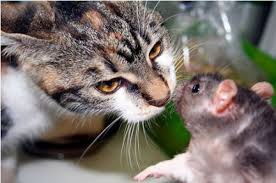
I have railed at movies that depict certain animals inaccurately (creating irrational fear outside the cinema!), and when characters with a mental illness do not act in keeping with what we know about the disease (in other words, the director relies on stereotypes of "otherness" for effect). The misunderstanding of basic biology, in particular, can make my skin crawl.
To my great relief, a movie I saw a few days ago didn't push my buttons - and it was a zombie movie, of all things! World War Z, directed by Marc Forster.
Of course, the movie expects a certain suspension of disbelief: for one thing, there is no such thing as the undead. (If an organism is still reactive and moving, it's alive. It may not have much quality of life, mind you, but it's not dead.) And the disease passed from the zombies via a ferocious bite transforms victims in mere seconds.
What I really liked about the movie--besides seeing a very intense Brad Pitt on the screen almost all the time, that is--is the zombie idea itself. The disease, which is never isolated and identified, affects a victim's brain. Suddenly, and I mean suddenly, the zombie becomes a twitchy, speedy, chomping machine with a single motivation: to attack human beings and bite them. That's all. There is no brain eating. The infected zombies want to recruit others.
The infection (which takes hold so rapidly) drives them to do this.
This is where the movie makes the most sense, scientifically.
In nature, there are many examples of pseudo-zombification, cases where a parasite - often a macroscopic one, like a fluke, but plenty of viruses, too - takes over the brain of the host and compels it to complete the parasite's life cycle. It's very, very creepy but true.
Example: toxoplasmosis, which makes rats lose their fear of cats, disinhibiting them to the point of actually asking Kitty to play. Kitty, not clear on the concept, eats rat, ingests parasite, excretes eggs at a later date.
Example: grasshoppers that commit suicide by jumping into pools, pleasing the parasites that have taken over their brains. (The worm needs water to reproduce.)
Maybe one day, some parasite will jump from another species and cause humans to act strangely around other people or maybe an intermediate host (which then infects humans). The parasite will change us to get what it wants.
It's horrible to contemplate. But it isn't all that far-fetched.
Thursday, May 16, 2013
The Power of Analogy
Yesterday, I read a fascinating article co-written (with Emmanuel Sander) by one of the great science writers of our time, Douglas Hofstadter. "The forgotten fuel of our minds" can be found in the May 4 issue of NEW SCIENTIST. According to the two authors, new research examining the use of analogy in everyday thought suggests that it is far from an occasional tool for supporting a proposition or explaining something: it is the very basis of most thinking in the first place. Whether we are learning something new by mapping it onto pre-existing knowledge, or we are simply having a conversation, we take old ideas and use them in novel situations.
 We use analogy whenever we use metaphors and similes, e.g., "His hair was like a bunch of ropes" or "Your premise doesn't hold water." And everyone uses expressions like these all the time. In fact, it is hard to imagine a conversation devoid of them altogether!
As I was reading, the power of analogy took place in my own mind. I drew parallels with my ongoing research into the omnivore brain. Could the ability to draw connections with previously acquired knowledge about the world (and oneself) have begun when we "learned" to be omnivores, about two million years ago?
Think about it: a herbivore (e.g., an antelope or a cow) doesn't need to differentiate much of its environment, but an omnivore, which must navigate a sea of choices (good, bad and in between) every time it wants to eat, does nothing but differentiate. It starts off its life by slowly learning safe choices from mother, then adds - presumably by trial and error - to this collection of useful facts as it goes along.
It is no accident that some of the smartest animals are the ones most diverse in their eating habits, e.g., bears, crows, raccoons. (Elephants being a notable exception that proves the rule.)

Humans pride themselves for their congitive abilities, citing logic, reason, and occasional intuitive powers among these strengths. The power of analogy contributes to our success as a species that confronts many choices - some lethal or at least challenging - every day. Wouldn't it be interesting if it is due to ancient adaptions to a diverse diet?
Friday, December 21, 2012
Overeating and tradition
It's the time of year when many Christians, former Christians, as well as those who want to jump on the bandwagon, so to speak, celebrate the end of the calendar year with at least one feast day, Christmas. It's no coincidence that the day to honor Christ's birth falls around the winter solstice. It is the gloomiest part of the northern hemisphere year, the start of winter, and a time for embracing any excuse for indulging in light, heat, and ample food (and drink). The Roman (pagan) feast of Saturnalia falls around this time, and we all know that the Romans were party animals.
 Today is one of the two ironic days of the solar year. It marks the beginning of winter - yet tomorrow the days start growing longer until we reach the summer solstice (around June 21). That day is the first day of summer, of course, but it also heralds the shortening of the daylight hours all the way up to Dec. 21 or 22.
If you look at a calendar from 100-200 years ago - say, 1800 - you will see how many saints' days there were. People were expected to fast on certain days, feast on others. I suppose this was a system that had been worked out (not necessarily "planned" by an elder or a committee, though who knows what kind of control went on, way back when?) to help with food distrubution amongst the populace. It was normal to go without all food for a day or two, or without certain foods - usually scarcities like land animals and their products - for a longer period, e.g., Lent. Later, there was a feast of some kind. The entire year was broken up into this on/off pattern, not just at major holidays like Easter.
When people now laugh about overeating at Christmas, they are simply honoring tradition, if you really think about it. The trouble is, they do not honor tradition all the time! They never fast. They never go without certain foods as a way of 1) respecting scarcity; 2) valuing the foods they consume by going without them from time to time (absence makes the heart grow fonder). That lopsided "traditional" behavior contributes, no doubt, to the epidemic of obesity in Western countries, the plague of food waste, the proliferation of intense farming operations, and the attendant environmental pollution and animal cruelty. More appreciative consumers would better honor the living beings who feed them.
Maybe it's time to bring back some of the old ways - while we still have the freedom to choose to abstain. Any future scarcities - leading to local or widespread famine - will force us to go without luxuries and maybe without minimal daily nutrients. How about starting a fashion for pre-holiday fasts? They wouldn't involve starvation, just selective abstinence and calorie reduction. How much better roasted bird and high-calorie desserts would taste after a week of bean soup and dry crackers!
HAPPY SOLSTICE!

Friday, November 23, 2012
Black Friday vs. BUY NOTHING DAY
It started, like so many trends, in the U.S.A. But now the phenomenon called Black Friday is coming to Canada.
Joy. (Sarcasm.)
What society doesn't need is another reason to pursue ephemeral thrills (=dopamine rushes) like some kind of basic human right/rite. But creating a ritual around a shopping frenzy (often with only pseudo bargains, as it turns out) seems to be doing just that.
Business may have depended on convincing people to buy ever since business was invented, but the past two decades or so have seen this model getting more and more into our collective psyches. I buy thereofre I am could be the modern credo. It seems that we have forgotten how to be happy without involving a commercial transaction. Shopping has gone beyond "retail therapy." The image that comes to mind is the old experiment where rats with electrodes poked directly into their so-called pleasure centers press a lever to stimulate themselves at the expense of everything else - even eating.
We need to stimulate our pleasure centers -- whatever those are -- at the expense of any kind of serenity or simplicity.
And as greater minds than mine have noted, purchasing something in order to feel "happy" creates a hole that can never be filled.
We have forgotten the meaning of the word "enough." In fact, I think the word is disappearing from our lexicon.
Business wants it that way. If you realize that you have enough clothing for the next year or so, you stop buying a new dress as a pick-me-up. If you stop eating when you're full, you eat less overall, and therefore need to throw less into your basket in the supermarket. Maybe you will stop going to a megamart and start frequenting independent stores instead. But business can't have that! They want you to think it involves too many decisions about quality and price.
If you do what you're supposed to do, you'll keep going to the same enormous store with the plummeting prices - they're plummeting because they say so ... how can you tell if you don't go elsewhere to compare? - and obediently fill your basket with needs and wants.
What business has already accomplished is the blurring of needs and wants in the average brain. We can hardly tell one form the other anymore!
Let us resist. Let us examine our lives, determine our true needs in quiet moments, far from the seduction of fancy ads and in-store "specials," and put things back that we really don't need. Not only will we have more money left for saving, or even for spending on better quality things that will last longer, we will have less to worry about.
See the "Reverend" Billy's tirade about shopping here.
The more you have, the more you have to lose. It's not freedom. It's a trap.
Buy Nothing Day, the day after American Thanksgiving, asks us to resist. Put away your wallet until you need something. Don't shop for comfort or solace or entertainment. Find those precious things in people, animal companions, wildlife, community, good works, solitude, the arts.
Long live the philosophy of BUY NOTHING DAY!
Thursday, September 13, 2012
Brain Porn (!?)
Came across this interesting (and quite funny) article in THE NEW STATESMAN today.
It's about the proliferation of brain science - or shall I say, pseudoscience - in the past five years or so. U.S. authors like Malcolm Gladwell and the recently dethroned king of accessible neuroscience, Jonah Lehrer, have led the trend. But many others from the U.K. as well as the U.S. have jumped on some sort of bandwagon. The bookstore shelves are full of them, and I'm sure many are soon to be published.
I have to say that I'm glad people are publishing articles and books about one of the most fascinating things in the universe, the human brain. (For one thing, I hope to turn this blog into a book one day, and I have another [smaller] book in the planning stages.)
However, I am alarmed that, like many fashions that pop up overnight like mushrooms after a rain, this one could be easy-come, easy-go. Once people catch wind of the insubstantiality of most claims, they will lose interest and move on to something else - something less solid underneath. After all, neuroscience on its own isn't exactly snakeoil, it's a perfectly respectable study of a highly challenging subject, with plenty of legitimate results. The trouble is, many of these so-called science writers don't bother to weed out the flimsy findings (that may sound wonderful) from the well-supported ones.
I like how this writer describes how neuro-everything is spreading throughout popular culture, largely due to the use of brain imagery, or "scans."
I'm all for caveat emptor: but how would the average consumer ride out this latest tsunami of fashionable cure-alls?
It's about the proliferation of brain science - or shall I say, pseudoscience - in the past five years or so. U.S. authors like Malcolm Gladwell and the recently dethroned king of accessible neuroscience, Jonah Lehrer, have led the trend. But many others from the U.K. as well as the U.S. have jumped on some sort of bandwagon. The bookstore shelves are full of them, and I'm sure many are soon to be published.
 |
| Lehrer's Proust Was a Neuroscientist (and you can be, too!) |
I have to say that I'm glad people are publishing articles and books about one of the most fascinating things in the universe, the human brain. (For one thing, I hope to turn this blog into a book one day, and I have another [smaller] book in the planning stages.)
However, I am alarmed that, like many fashions that pop up overnight like mushrooms after a rain, this one could be easy-come, easy-go. Once people catch wind of the insubstantiality of most claims, they will lose interest and move on to something else - something less solid underneath. After all, neuroscience on its own isn't exactly snakeoil, it's a perfectly respectable study of a highly challenging subject, with plenty of legitimate results. The trouble is, many of these so-called science writers don't bother to weed out the flimsy findings (that may sound wonderful) from the well-supported ones.
I like how this writer describes how neuro-everything is spreading throughout popular culture, largely due to the use of brain imagery, or "scans."
In The Invisible Gorilla, Christopher Chabris and his collaborator Daniel Simons advise readers to be wary of such “brain porn”, but popular magazines, science websites and books are frenzied consumers and hypers of these scans. “This is your brain on music”, announces a caption to a set of fMRI images, and we are invited to conclude that we now understand more about the experience of listening to music. The “This is your brain on” meme, it seems, is indefinitely extensible: Google results offer “This is your brain on poker”, “This is your brain on metaphor”, “This is your brain on diet soda”, “This is your brain on God” and so on, ad nauseam. I hereby volunteer to submit to a functional magnetic-resonance imaging scan while reading a stack of pop neuroscience volumes, for an illuminating series of pictures entitled This Is Your Brain on Stupid Books About Your Brain.I wish someone would pay me to read a pile of these books (without the scan, thank you) and do a compare-and-contrast for a magazine - after I check some of each book's central thesis with a trusted source, of course.
I'm all for caveat emptor: but how would the average consumer ride out this latest tsunami of fashionable cure-alls?
Tuesday, August 7, 2012
Abundance & Waste
Went to the local farmers' market the other evening. In one of the regular fruit stands, a woman was cutting up pineapples, a nice service for those of us afraid to cut ourselves in the process. But the waste piled up - some of which could have been eaten.
 It reminded me of the frightening statistics concerning food waste. Every year, in a single country like Canada, millions of tons of food are discarded. Some of it is household refuse - you know, the stuff at the back of the fridge that is starting to move - and the rest comes from restaurants, outdoor venues, etc. etc. The richer the country, the larger the waste of otherwise usable material.
No surprise there. But since so much money could be saved, not to mention the ever-diminishing available area in landfills, you have to wonder how this problem has gotten so out of hand.
Abundance must do something critical to the human brain, more than just causing us to salivate, in the case of fresh food. It causes us to take chances, which we wouldn't dare do in times of scarcity. (Wasteful people in famines get hungrier faster, and probably die sooner.)
I wonder if the sight of multiple items of the same category - such as the squashes below - creates different responses from , say, an all-you-can-eat buffet with a variety of items?

Wednesday, August 1, 2012
The Future of Food

Why should they have worried up to now? When something does not require your attention by being irregular, even occasionally difficult or nonexistent, we stop thinking about it.
Well, maybe now we will stop taking our food for granted.
Sure, the subject has come up many times over the decades of our supposed wealth and prosperity. But the talk has mostly been a part of aid programs to other countries. Those "other countries" are still hungry or nearly so, but now we have ceased to regard a steady flow of foods and food products from producer to consumer as a given.
People are talking more about old-school solutions to food insecurity, to add to the new-fangled ideas dreamed up by scientists and politicians:
- Home gardens;
- Community gardens;
- Urban agriculture (as in parts of Cuba);
- Alternative foods (see below);
- Better versions of existing crops;
- Different ways of growing all sorts of crops, such as intercropping - the old way mostly tropical farmers will plant two to four species all together, thus minimizing sun damage, water loss, invertebrate and vertebrate predation, and weeds.

And what about "alternative foods"? As John Vidal says in his article in The Guardian, insects and lab-grown meat may provide most of our protein one day. The husbandry of large animals like cattle may become undeniably unsustainable, due to loss of pasture to drought, loss of feed to direct human consumption (instead of indirect, i.e., via the cow which eats it first), and low water supplies. (Cattle require loads of water to drink in their lifetimes, and the slaughtering process is also very water-intensive.)
As the human population continues to grow, and most people insist on animal protein every or nearly every day, we're going to have to find solutions.
Grasshopper soufflé anyone?
Monday, July 16, 2012
The "Usefulness" of Nature
To many people, NATURE is a place "out there." They fail to notice how indebted we are to the natural world - and how much a part of it we still are, despite thousands of years of trying to separate ourselves from it. It is neither supermarket nor recreation site nor messy menace we should keep out as much as possible.
Our food certainly continues that thread of intimate connection, even if some people would happily try to sell you lab-grown meat and genetically modified plants. In fact, our diet has probably been one of the biggest problems. We have evolved strategies to separate good from not-good food, and that mindset has led to separating "good" (useful) nature from "bad" or useless.
I think many would agree that we have messed up spectacularly in this dichotomy.
World-renown marine biologist Sylvia Earle says this about saving apparently useless species frome extinction. (A larger part of her essay appears here.)
In future posts I will try to wrestle with these issues.
Our food certainly continues that thread of intimate connection, even if some people would happily try to sell you lab-grown meat and genetically modified plants. In fact, our diet has probably been one of the biggest problems. We have evolved strategies to separate good from not-good food, and that mindset has led to separating "good" (useful) nature from "bad" or useless.
I think many would agree that we have messed up spectacularly in this dichotomy.
World-renown marine biologist Sylvia Earle says this about saving apparently useless species frome extinction. (A larger part of her essay appears here.)
[W]e need the leatherback, the panda and the worm because they might be useful to us. We have all heard about medicines that come from the rain forest. That is true. But consider this. With all of the millions of species on this planet is it possible that there is a cure for colon cancer in the genetic information of a beetle, a plant or a fungus in the forests of Costa Rica? The earth is like a house overflowing with wedding presents. When the bride and groom come home from their honeymoon they decide it is too crowded and throw out some of those gifts. A few weeks later they find that they don’t have a toaster or a vacuum. They were there but got thrown away. That is what we are doing, throwing away the gifts of biodiversity before we even unwrap (study) them. There are scientists who question whether biodiversity is needed for the stability of ecosystems. We might want to keep that biodiversity around until we figure that out.I see her approach, but it saddens me. In order to get people to agree with her, she's playing into the same dominant social paradigm that causes the problem.
In future posts I will try to wrestle with these issues.
Friday, July 6, 2012
The Omnivore Goes Shopping
One reason I started this blog was to discuss the brain - one of my favorite subjects. I certainly enjoy talking about food as well! The study of food involves almost every university course you can think of - from economics to physiology. Being a generalist, this suits me perfectly.
The omnivore brain evolved, I believe, to find us food in the best way possible - but the results have had influences in every other or almost every other part of our behavior. I hope to be discussing these in future posts.
One came to mind this monring, while I was reading Grist.org, a U.S. environmental news site. Have a look: http://grist.org/living/h-ahem-cheap-clothing-hurts-the-planet-the-economy-and-your-style/The subject was clothing - how cheap clothing harms the planet. Adjusted for inflation, the price of most clothes has never been as low as it is now. So everyone, rich or poor, can have a wardrobe packed with many, many clothes. Unfortunately, these items may be low quality. They don't hold up after several washes, the sewing is inadequate, and the colors are cheap. The more a person has packed in her drawers and closet, the less she is likely to wear any particular item - in fact, she may forget she even has it at all! That's false economy - for her. (Anything she paid - even if she got the dress at 75% off - is 100% wasted if she never wears it.) For the businesses and the workers who labored to get that item to the store, it's also a kind of waste. And the rivers polluted with textile effluence, the cotton and flax fields loaded with pesticides ... enough said.
Why do we buy many cheap things instead of a few good quality things that look better and cost about the same or even less than the total paid for the garbage? It's not simply a "bargain-seeking gene" at work. It's not simply the fact that many people do not add up how much they spend. It's the matter of the omnivore brain: it delights in abundance. Like the way it overeats fat, sugar and salt when the opportunity arises, because these nutrients were always in low supply in nature, it goes a bit overboard when anything seems easy to gather all at once - a rack of tank tops marked down twice could be a field of ripe blackberries to that part of our brain.
If we know the brain has these built-in tendencies, it's easier to control them. It involves self-awareness, for one thing: realize that you lose your common sense when you see a SALE sign, and maybe leave your credit card at home! Education also helps: my mother taught me from an early age to wait to buy one pair of good shoes instead of blowing a few dollars on a cheap pair that would hurt my feet (and end up in the trash). More education in the schools about sustainable fashion (teens go through these cheap-and-disposable clothes more than anyone) would help. However, my personal environmental agenda aside, I think that putting the emphasis on fashion instead of sustainable would convert greater numbers of buffet-style shoppers into wardrobe-building style mavens. Bring in someone who looks terrific on a small number of stylish, high-quality, long-lasting clothes and accessories, and let the class judge with their own eyes.
Meanwhile, society has to change as well. We are allowing business and its emphasis on high turnover to tell us how to shop - at the expense of low-paid workers in other countries, and the land where everything comes from and returns to....
Tuesday, June 26, 2012
A Minor Trauma: Eating Away From Home
Ever wonder why many cities are starting to look the same? I mean, if you travel a fair bit, or you watch the details on mainstream movies. There are fast food chains almost everywhere (and the same kind of chains; I won't honor them by listing even a few). Is the world simply becoming less imaginative, allowing the insidious creep of homogeneity to flatten out our food choices? Are people in other countries eager to have fun "food" instead of their tradtional fare, so they can be "like us"?
Yes, all of these are probably true. But these chains proliferated across North America in the first place, before going overseas, because many people were used to seeing those brands, and the familiarity comforted them, perhaps even more than the taste or texture of the foods themselves. Eventually, the companies expanded wherever they could.
Eating new food, even if you are only in a neighboring county, let alone in an entirely new culture, is a potentially dangerous venture. Part of being an omnivore - the by-now famous "omnivore's dilemma" - is the need to balance fear and desire. (It has that in common with life in general, I suppose!) You desire novelty, because new foods may be more nutritious or simply tastier. An ancient human who scorned new foods would have had to be extremely lucky that his tried-and-true favorites never became scarce. On the other hand, if you are too eager to try new things, and aren't careful, you could eat something poisonous or toxic. Ever wonder why we evolved to eat in groups? Watching others eat something and suffer no ill effects is a great reasurance in the hazardous world of omnivory.
Individuals vary greatly in how they balance fear of and desire for novelty. Conservative thinkers are less prone to poisoning, perhaps, but they lack variety in their diets. The disadvantages of this monotony may extend beyond the pleasures of the palate: they may lead to hard-grained habits that will never budge, even if the doctor orders a change of pace for health reasons.
On the other end of the spectrum, we have the cowboys of cuisine, the daredevils of the diet. I don't need to mention their names, because those people already make plenty of money by attracting attention to themselves (what better entertainment for an omnivore than the chance to watch someone foolish enough to eat something still alive or fermented to the point of putrefaction?).
Back to travel. Being away from home is risky in itself. Then add new customs, perhaps a new language or two, and try to find something to eat! Everything looks kind of ... odd, until.... Hey, there's that hamburger place we used to go to back home! It's a bit boring, but at least we know what it's supposed to taste like, and we won't have to worry about the local dishes!
Understandable, yes, but you wonder why some people bother to travel at all, if they're just going to eat "at home" while they do!
Wednesday, May 9, 2012
Omnivore perspectives from Down Under
How the time flies!
I have meant to keep this blog from sliding into oblivion, the place where all good intentions tend to end up, but y'know ... life got in the way.
I have been focussing on various kinds of nonfiction and fiction in the intervening months, always busy thinking and writing and reading. There is more about the human brain coming out every day, in the media, and in published papers and books. All encouraging.
Nice to have more to read, but the pressure to get my own theories sorted out and set on paper/screen is greater than ever!
I found this blog entry today from a former correspondent, Peter Grant, a fellow generalist in Hobart, Tasmania. Here are his thoughts on omnivores: http://www.naturescribe.com/2012/05/omnivores-delight.html
It's interesting that he uses bears as his prime examples of omnivores. Like us, they are intelligent, selective, and wasteful. Studying the way bears navigate the food web may shine some light on our own habits.
Friday, November 4, 2011
Acceptance of anomaly

My friend in NY city said about 1000 trees in Central Pk died or had to be pruned down to just about nothing.
We, here, have large areas of green trees among the gold and red. When the temperatures plunge further in the next few days, I hope the air remains dry, or the same calamity may befall our precious trees.
With increasingly frequent freak occurences, abnormality may be the new norm. At what point will the general consensus be that something just ain't right? How many anomalies does a person have to witness before the idea of "right" starts to shift?
Everyone knows how difficult it is to change a food habit. (We can thank the omnivore brain for that.) Perhaps all resistance to change comes from this most basic one. The omnivore brain evolved to deal with an embarrassment of riches, food-wise. Our metabolic needs require dietary variety - yet a measure of conservatism is necessary to prevent or minimize accidental poisoning. Foolhardy gourmets die young.
But people tend to cling to other notions - plenty of them, in fact - not only what kind of breakfasts works best. The tendency to stick to something once it works ("bacon and eggs - what's not to love?") can lead to inflexibility when it comes to abstractions such as climate change.
It would be interesting to do an experiment in which opinions on controversial and fairly abstract environmental problems were measured along with the person's dietary range. My hypothesis is that those who eat the most conservative diet (i.e., least open to novelty) are also conservative thinkers.
Sunday, August 28, 2011
Three Sisters Soup
The end of summer/beginning of autumn is the time to reap what we sowed. Harvest. Such a comforting word! No better reminder of eating locally can be had.
I really like old recipes that were very locally inspired. What choice did they have back then but to be local? It was a necessity not a fad.
One such recipe is the soup composed of the tres hermanas: squash, beans, and corn, the mainstays of Mexican diet and culture. That native diet works due to a delightful confluence of factors.
- The plants grow together well. The corn grows tall, providing a "pole" for the climbing bean vines, and slight shade for the creeping squash vines below. The beans' roots also provide nitrogen in the soil for the other two species.
- The vitamins and amino acids in the three products complement each other. Adding rice makes for an even healthier meal.
- The flavours and consistencies combine superbly in a single dish, or several dishes eaten together.
- The plants ripen around the same time - or can be stored easily until it all "lines up."
- All plants are indigenous: adapted to a long growing season and very hot, dry conditions.
To make Three Sisters Soup, bake a squash (cut in two and de-seeded) until it is nearly entirely cooked. Remove the skin off and cut into small pieces. In a medium pot, put the cubed squash, 2 cups of vegetable stock, herbs to taste, about a cup of corn kernels, and about a cup of small pre-cooked beans. (I prefer navy, cannelli, or baby lima.) Cook for about 20 min. on a moderate heat. Add a dollop of butter and stir in before serving. For a creamier soup, purée the squash before adding to the stock, and add a bit of organic milk or cream. Serve with a green salad and garlic bread - all locally sourced, of course!!Buen provecho!
Sunday, August 7, 2011
Holding onto Summer
It's still warm outside, but already the sun is winking over the mountain (where I live) a little later every morning, signalling to my deep brain that the summer is edging away. Soon, the days will be significantly shorter. In their "deep brains," plants will start shutting down and birds will prepare for migration. The science of such signs - day length, mean daily temperature, flowering rates, animal sightings, etc. - is called phenology. The deep brain, of which I speak, is the part - call it instinct, if you prefer - that learned long ago to respond to nonverbal signs in the environment (and probably branched out to pick out cues from other people, too). It's only a few years ago that I noticed how a certain time of year would bring on a mood: the phenological data were reminding me on a visceral level of an event (sad, bitter, regretful, whatever) that had happened at the exact same time, years before.
[This year, I am remembering several happy-sad experiences I had exactly a year ago. Even if I am preoccupied with other duties, the very act of going outside in similar weather brings those experiences back to the surface. And the emotions that accompanied them come rushing back as well.]
 Spring is a special season because of its association with rebirth, but summer's a virtual synonym for leisure, fun, relief from school or work, time with people we care about, and - most of all - bountiful food. Most people in western countries might not think of the food aspect too much; after all, air transport has wiped out much of the seasonality of most food stuffs for us here. If you can get something in January as easily as you can in July, that plus side of summer is less noticeable.
But there's no denying that local, seasonal produce is best. Even before the locavore movement, or the 100-Mile Diet, people extolled the qualities of June strawberries, July tomatoes, and August blueberries.
Is there some way of holding onto that taste, that delight? Is it possible to extend the shelf life of a summer's day?
The most prosaic answer is yes: dry, freeze, or can the produce at its peak and enjoy it in somewhat degraded but still delicious form throughout the year, even in deepest winter, when the only tomatoes, peaches, and strawberries available taste like cardboard.
Here's one set of instructions to start: http://www.guardian.co.uk/lifeandstyle/2011/aug/07/nigel-slater-classic-soft-jam
I have never canned anything - a series of small kitchens (including the present one) put an end to any such ideas. But I have had a lot of fun making soup ingredients with a food dryer, and hope to do so again soon. I also freeze wild blueberries, red and black currants, and my own black raspberries. I held off the last batch as long as February, and served them at a special meal. The fact that I had picked most of them myself made it even more special.
I will embrace autumn when it arrives, and even enjoy winter, but I am not ashamed of holding onto summer as long as I can.
[This year, I am remembering several happy-sad experiences I had exactly a year ago. Even if I am preoccupied with other duties, the very act of going outside in similar weather brings those experiences back to the surface. And the emotions that accompanied them come rushing back as well.]

But there's no denying that local, seasonal produce is best. Even before the locavore movement, or the 100-Mile Diet, people extolled the qualities of June strawberries, July tomatoes, and August blueberries.
Is there some way of holding onto that taste, that delight? Is it possible to extend the shelf life of a summer's day?
The most prosaic answer is yes: dry, freeze, or can the produce at its peak and enjoy it in somewhat degraded but still delicious form throughout the year, even in deepest winter, when the only tomatoes, peaches, and strawberries available taste like cardboard.
Here's one set of instructions to start: http://www.guardian.co.uk/lifeandstyle/2011/aug/07/nigel-slater-classic-soft-jam
I have never canned anything - a series of small kitchens (including the present one) put an end to any such ideas. But I have had a lot of fun making soup ingredients with a food dryer, and hope to do so again soon. I also freeze wild blueberries, red and black currants, and my own black raspberries. I held off the last batch as long as February, and served them at a special meal. The fact that I had picked most of them myself made it even more special.
I will embrace autumn when it arrives, and even enjoy winter, but I am not ashamed of holding onto summer as long as I can.
Friday, July 29, 2011
Summer BBQ
In the depth of summer, the natural impulse would be to eat cool, refreshing food, not hot and dry stuff. In addition to drinking all those glasses of water (ha - more likely beer, ice tea, lemonade, and pop) to replace fluids lost to evaporation from skin and breath, we need to eat water-rich food. (Watermelon is something like 98% water, but lettuce and other vegetables are also good sources of H2O.)
Yet the smell of roasting meat fills the air, not during the cold weather - the precise time you'd think most appropriate for hot, fatty food from a very hot fire - but in the summer.
Instead of sticking to a menu full of no-cook or low-cook fare, e.g., salads, sandwiches, tacos, sushi, and cold soups, in North America, at least, people love BBQ. They fire up the gas or charcoal grill. They set up a grill over a campfire. They - usually the males of the group - drag out massive amounts of red meat, raw cuts or semi-cured (e.g., hot dogs) to throw on the barbie.
Occasionally, seafood and vegetables will join or replace the cow, pig, and chicken parts, but classic BBQ means something bloody. It's as close to our so-called Original Diet as you can get without tearing something off an animal with your (inadequate) teeth and non-existent claws.
There's the clincher. Common sense may tell us to reach for the water in this weather. But an atavistic streak seems to be driving us to open-air meat fests, where the sight, sound, smell and later taste of fat (not protein - that comes much later) is critical. The fat in salad is very modest - zero in most fruit.
Why would we "need" fat in the warm weather? Isn't it crazy to overeat when it's already too hot to move?
It would be interesting to see if the craving is purely biological, or if something cultural - a favored way of male bonding, perhaps, carried down through the generations? - is at play.
If biological, there are several sides to the question. The brain is a very fatty organ, and it tends to slow down when fat is reduced in the diet. (Perhaps that's why supermodels tend to be just as super-grumpy as they are super-thin.) Maybe the craving for fat is a way of compensating for all the water and other fat-free fare we are forced to consume in the summer. (We don't have to drink quite so much in the winter.)
But surely, surely, the idea of cooking outside and delivering the results to your family and tribe is a very deep (and gratifying) memory in most men's brains? It became incorporated into culture, and then culture reinforced whatever appeared in individuals: a positive feedback loop.
That is something I will return to again in this blog.
Monday, July 18, 2011
Introducing OMNIVORE BRAIN
Welcome to my blog about the way brain and diet have "interacted" over millennia, each driving the other to greater complexity.
I have been a long-time student of all things related to the brain. For the past ten years or so, I have become fascinated with food and the human diet. Only recently have I seen how intimately food and brain are connected.
We wouldn't be who we are as a species if not for all those higher cortical functions (e.g., language and facial recognition). But we would be very, very different if we ate only plants (herbivorous), only animals (carnivorous), and certainly if we focussed on one species the way a koala or panda does. You don't need to be a biologist to know somehow that a bamboo-eating panda is quite different from a black bear in behavior, and you'd probably be aware that the bear is far more intelligent. Like us, all bears (except perhaps polar bears) are omnivores: they can subsist on a diverse diet; indeed they must have a wide variety of foodstuffs in a given day. It is no surprise that bears and other non-human omnivores (e.g., raccoons and crows) are among the smartest creatures on the planet.
In coming posts, I'll be discussing academic and mainstream news on the evolution of the human diet - and the many features our brain has developed in response to the environment which provides the incredible array of (more or less edible) materials we call food.
I am planning to write a book about this subject next year. All comments welcome. You might even make it into the acknowledgements!
Subscribe to:
Posts (Atom)